CDC Shooting Prompts Federal Health Workers to Demand Stronger Protection From Kennedy
Hundreds of current and former HHS employees have signed a letter accusing Secretary Robert F. Kennedy Jr. of contributing to conditions that led to the Aug. 8 attack on the CDC's Atlanta campus.
By Juan Gonzalez ·
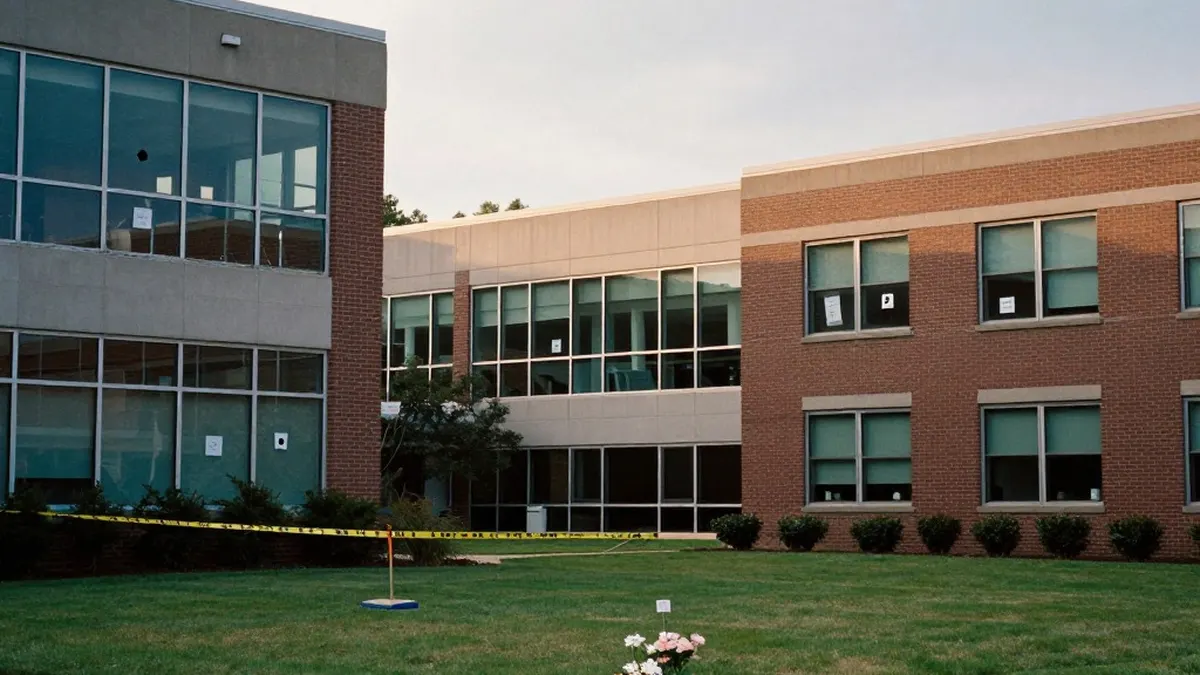
Employees at the Centers for Disease Control and Prevention, the National Institutes of Health and other federal health agencies are calling on Health and Human Services Secretary Robert F. Kennedy Jr. to do more in the wake of the Aug. 8 attack on the CDC's main campus in Atlanta.
A letter signed by hundreds of current and former HHS workers, addressed to Kennedy and members of Congress, accuses him of being "complicit in dismantling America's public health infrastructure and endangering the nation's health." It cites his questioning of the integrity of the CDC workforce, false claims that COVID vaccines are unsafe or ineffective, vaccine policy changes driven by ideology rather than science, and a contribution to "harassment and violence experienced by the CDC staff."
The signatories link those factors to the shooting, in which a gunman standing on an Atlanta street corner fired more than 500 rounds at the campus. Authorities have said written documents found in his home show he was motivated by discontent with COVID vaccines. Family members told Atlanta News First that he believed a vaccine had injured him and was harming others.
HHS responded to the letter in an emailed statement to NPR on Aug. 20. It said Kennedy is "standing firmly with CDC employees" and that their safety and well-being remain a top priority. The department added that any attempt to "conflate widely supported public health reforms with the violence of a suicidal mass shooter is an attempt to politicize a tragedy."
The gunman arrived on a Friday afternoon near the end of the workday and struck six buildings, where employees barricaded themselves in offices, hid in closets and crouched under desks. He killed responding police officer David Rose, 33, before taking his own life.
"This is a major event," said Dr. Fiona Havers, a former CDC official who left the agency in June and signed the letter. She said public health workers need far more support than they currently receive. She also argued that inflammatory rhetoric and misinformation about COVID vaccines, now coming from the HHS secretary and the administration, has given such views a legitimacy they may not have had before.
Dr. Elizabeth Soda, an infectious diseases physician at the CDC's National Center for Emerging and Zoonotic Infectious Diseases, returned to campus days later to retrieve her laptop. Speaking in a personal capacity, she said she never imagined seeing bullet holes at the agency. She had left campus 30 minutes before the shooting and texted colleagues throughout the attack. After the initial shock, she said, the violence did not seem surprising, given years of inaccurate health information and the politicization of science.
Kennedy toured the Atlanta campus in the days after the attack, meeting with the CDC director and security staff and visiting the wife of the slain officer. HHS said he called the CDC "a shining star among global health agencies." Staffers say, however, that he has not addressed the vaccine misinformation that authorities say motivated the shooter, nor fully defended the agency's mission. In an interview with Scripps News, Kennedy said officials had said things "not always true" to persuade people to get vaccinated during the pandemic, and that "public health agencies have not been honest."
The letter asks Kennedy to stop spreading inaccurate health information, affirm the CDC's scientific integrity and guarantee the safety of the HHS workforce. Employees from other agencies also signed. Ian Morgan, an NIH postdoctoral fellow speaking for himself, said the attack affects all federal workers. He noted that security has increased at the NIH campus in Maryland but questioned how staff can feel safe when leaders are "putting a target on your back." The signatories have requested a response from Kennedy by Sept. 2.
Source: KJZZ